
Key Takeaways
- There is no single price for AI search optimization. Quotes move with locations, competition, content volume and ticket size, so compare written scope, not a headline number.
- Some agencies charge a one-time setup fee for directory and schema work. Ask what it covers line by line, and insist on month-to-month terms once setup is done.
- The DIY foundation (Foursquare, Bing Places, Apple Maps, LocalBusiness schema) costs $0 in software and 3 to 4 hours of time, and covers the largest single AI citation signal.
- Hidden costs to watch for include long-term contracts, per-location overcharging, undisclosed tool markups, and agencies rebadging traditional SEO as AI search without changing the underlying work.
TL;DR
- DIY foundation: $0 + 3 to 4 hours of your time
- Market reference: Ahrefs' survey of 439 SEO providers puts local SEO at $1,557 a month on average ($1,819 from agencies, $1,150 from freelancers), per its SEO pricing study. That is local SEO, not AI search.
- Quotes move with: locations, competition, content volume and ticket size
- Already paying for SEO? Add AI search on top of the work that brings in enquiries, don't cut it. How to adjust the budget.
- Ask every agency for: a written line-item scope, month-to-month terms, and a lead log you can check yourself
What the work covers week to week is set out on our AI search optimization services page.
What You Get at Each Level of Service
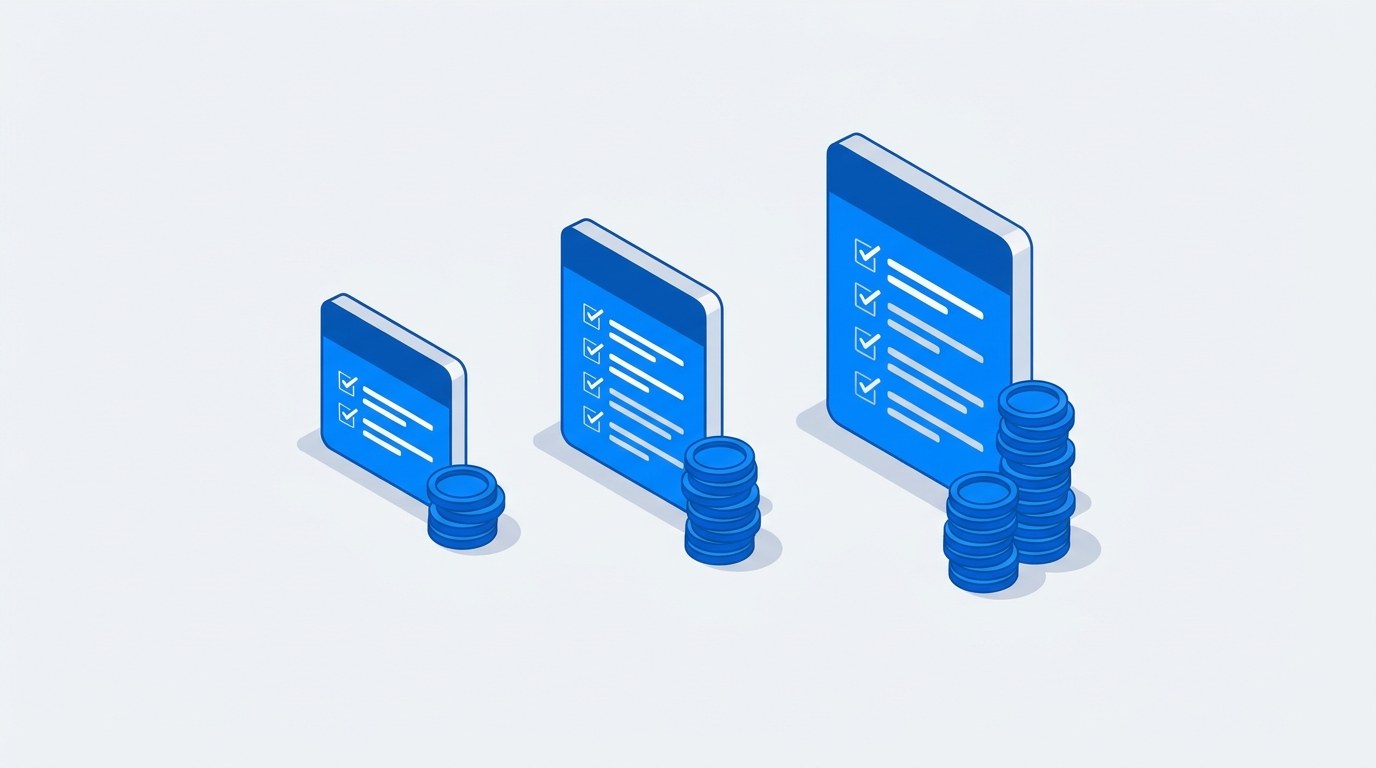
What Moves Your AI Search Budget Up or Down
When an owner asks me how much AI search costs, I give them a range, and the range exists for a reason. AI search isn't one product. It's a stack of work, and your business decides how much of that stack you need. Four things push you up. Two pull you down.
- Ticket size. When one job is worth a lot, it pays to go deeper on content and citations, because a single win covers months of work. A med spa will spend more than a solo bookkeeper, and it should.
- Competition. If several competitors in your market already get named by ChatGPT, you need more pages and a wider citation network to move them aside. Contested questions cost more to win.
- Locations. Every location has its own listings and its own questions. More locations means more work, but not a full second budget for each one, and the per-location point under hidden costs below shows you where to push back on a quote that pretends otherwise.
- Content volume. The comparison and decision-stage pages that get cited take real hours to write well. The more questions you want to own, the more of your budget goes on writing.
- A thin field and a short list of questions. If few competitors are cited for what your buyers ask, the foundation work alone can get you named.
- Doing the foundation yourself. Claim your own Foursquare, Bing Places and Apple Maps listings and add your own schema. Then you only pay someone for the ongoing content and citation work.
Notice what isn't on either list: software. The cost is labour and content. If a quote leans on tool fees, ask what each one is for.
How to Adjust Your SEO Budget for AI Search
Don't cut the work that already brings in enquiries to pay for it. Find out what your current SEO spend buys, keep what overlaps, and add the AI layer on top.
- Check what your current spend produces. Ask your agency for the calls and enquiries that came from search last quarter, not a rankings chart. If they can't show you, fix that first, whoever ends up doing the AI work. Five things to check when your agency says it does AI search covers the questions to ask.
- Leave the overlap where it is. Your Google Business Profile, your site's technical health and your service pages help you in Google and in AI answers. Don't pay two people for the same work.
- Fund what AI search adds. Listings outside Google (Foursquare, Bing Places, Apple Business Connect), schema that names your exact business type, and pages that answer price and comparison questions. More than 70% of ChatGPT's local results come from Foursquare, so check that listing before anything else.
- Put tracking in before the money moves. Add "ChatGPT or another AI tool" to the "how did you hear about us?" question on your forms and phone script, and keep a lead log. Then you can compare cost per enquiry for each channel from your own numbers.
- Shift on evidence. Review the log each quarter. If AI enquiries are coming in, move more budget across. If they aren't, you find out before you've moved much.
Running AI search next to the agency you already have is set out in full in what an AI-only add-on costs next to your SEO retainer.
AI Search Optimization vs Google Ads vs Traditional SEO
The three channels have different cost structures and different payoff curves. Below is how the spend behaves in each one.
Click costs vary by trade and market. Track cost per inquiry from your own lead log, not an agency average.
Want a specific quote for your business?
Free 30-minute call. We test your AI visibility live, then quote based on what your specific niche and city require. No commitment.
Book a CallFrequently Asked Questions About Pricing
Pricing is one slice of the decision. For the broader question set we hear most often (timelines, what counts as a citation, how it works in low-volume niches), see our full AI search optimization FAQ.
How much does AI search optimization cost in 2026?
For a market reference, Ahrefs' survey of 439 SEO providers puts local SEO at $1,557 a month on average ($1,819 from agencies, $1,150 from freelancers) (ahrefs.com/blog/seo-pricing). That is a local SEO figure, not a measure of AI search pricing. What moves any AI search quote is scope: how many locations, how many citation networks need updates, how much comparison content gets produced each month, and how much ongoing AI citation monitoring is included. Ask for that scope in writing, line by line, before you compare two quotes.
How do I adjust my SEO budget for AI search?
Keep the SEO work that already brings in enquiries and add AI search on top, rather than cutting one to pay for the other. Your Google Business Profile, site health and service pages help in both, so don't pay for them twice. Put the new money into what AI search adds: listings outside Google such as Foursquare, Bing Places and Apple Business Connect, schema with your exact business type, and pages that answer price and comparison questions. Add an AI option to your 'how did you hear about us?' question before any money moves, then shift budget on what your own lead log shows.
Is AI search optimization cheaper than Google Ads?
It depends on your niche, and the honest answer comes from your own lead log, not an agency average. Google Ads charges per click at a price set by auction, and the clicks still have to convert through a landing page. AI search is paid as work (listings, schema, content), and the citations it earns keep working after the month ends. The fair comparison is cost per inquiry, measured from your own lead log for both channels over the same months. AI search inquiries also tend to arrive with higher intent because AI gives a recommendation, not a list of options.
Is AI search optimization cheaper than traditional SEO?
Compare what each one buys, not the headline price. A traditional SEO retainer typically buys backlink outreach, monthly blog content, and Google Business Profile management. An AI search retainer should buy complete directory infrastructure, schema markup, citation network optimization, monthly comparison content production, and citation monitoring across ChatGPT, Perplexity, Claude, and Google AI Overviews. Different deliverables, different mechanism.
What's included in a typical AI search optimization retainer?
A complete monthly retainer typically includes: Foursquare listing setup and ongoing optimization (the largest input to ChatGPT local data, contributing roughly 70%), Bing Places and Apple Maps presence, LocalBusiness schema markup with the correct industry subtype, citation network depth across industry-specific directories, monthly decision-stage content production (1 to 2 comparison or pricing posts), structured review content optimization, and monthly citation rate reports across the major AI engines. Higher tiers add multi-location management, custom comparison content, and faster turnaround on optimization changes.
Are there setup fees on top of the monthly retainer?
It depends on the agency. Some charge a one-time setup fee for the initial directory infrastructure work (Foursquare, Bing Places, Apple Maps, schema implementation, citation audit). Ask what the fee covers, line by line. Claiming listings and adding schema is hours of work, not weeks, so a setup fee larger than two months of the retainer deserves a written breakdown. Also ask whether the engagement is month-to-month once setup is done.
What's the cheapest way to do AI search optimization?
The DIY route covers the largest single signal at zero cost. Claiming and optimizing your Foursquare listing takes 30 to 60 minutes and gets you into the data source ChatGPT uses for 70% of local recommendations. Adding Bing Places and Apple Maps is another 30 minutes each. After that, you can hand-add LocalBusiness schema to your site (free if you have a developer, or use a generator like schema.dev). The diminishing returns kick in around the citation network and ongoing content production, which is where agency retainers earn their keep. Total DIY foundation: 3 to 4 hours and $0 in software costs.
Why can AI search cost less per inquiry than Google Ads?
Three reasons. First, AI search optimization is cumulative. Once you're cited, you stay cited until your data changes or competitors catch up. Google Ads cost stops working the moment you stop paying. Second, AI search bypasses competitive bidding. ChatGPT cites the best-structured data for a query, not the highest bidder. Third, few local businesses are optimizing for AI search yet, so winning a citation slot is less contested than winning an ad auction, where every advertiser in your market bids for the same inventory.
Should I pay for AI search optimization if my business is brand new?
For a new local business, AI search optimization is one of the highest-ROI dollars you can spend. The path to first results is 30 to 60 days vs. 6 to 12 months for traditional SEO. The work establishes the directory and citation infrastructure that you'd need eventually anyway. And starting before your competition reduces the long-term cost of catching up later. The case to delay is if you don't have the monthly budget for an agency yet, in which case start with the DIY foundation work and add agency support when revenue allows.
What questions should I ask before paying for AI search optimization?
Ask: (1) How do you measure citation rate, and what tools do you use to monitor across ChatGPT, Perplexity, Claude, and Google AI Overviews? (2) What is the deliverable timeline for the first 30, 60, and 90 days? (3) Do you handle Foursquare, Bing Places, Apple Maps, and schema implementation in-house, or do you outsource? (4) What does success look like in 90 days, and what happens if you miss it? (5) Is the engagement month-to-month or contracted? (6) Do you produce decision-stage content (comparison, pricing, decision guides), or are you producing informational content? An agency that can't answer these clearly is selling traditional SEO with AI buzzwords.
Get a price for your specific business
We test your AI visibility live on a free 30-minute call. Then we tell you what specifically your niche and city require, and what it would cost. No commitment.
Book the Free Audit →There is a fuller walkthrough in What an AI-Only Add-On Costs Next to Your Existing SEO Retainer.

About the author
Matthew Johnson is the founder of Pleiades Consultancy. He previously scaled his own marketing agency to multiple six figures before serving as CMO of an Amazon agency, where the client base tripled from 15 to 45 active clients during his tenure. He worked with some of the largest names in e-commerce, including Ridge Wallet, HexClad, BK Beauty, The Woobles, Walkize, Lonely Planet, and Obvi. He now works with local businesses to maximize their client acquisition and visibility through AI search with ChatGPT, Claude, Gemini, Perplexity, and Bing Copilot.